Nadar na natureza
Uma revisão exploratória dos benefícios da natação em águas abertas para a saúde mental e o bem-estar
Downloads
Palavras-chave:
Natação Em Águas Abertas, Saúde Mental, Bem-Estar, Natação Em Águas Selvagens, Conexão Com A Natureza, Natação Ao Ar LivreResumo
A natação em águas abertas (também conhecida como natação ao ar livre ou em águas selvagens) é uma atividade popular que tem despertado interesse recentemente na área da saúde mental. Além disso, é uma atividade acessível e de baixo custo, que requer pouco ou nenhum equipamento especializado, além do acesso a um "espaço azul" apropriado. Consequentemente, pode ser uma intervenção eficaz e acessível que apoia a saúde mental e o bem-estar em todo o mundo. Esta revisão de escopo tem como objetivo resumir a literatura sobre natação em águas abertas. A natação em águas abertas pode levar a melhorias no humor e no bem-estar, redução dos sintomas de sofrimento mental e foi vivenciada como um processo positivo e enriquecedor para muitos. Os "espaços azuis" envolvem contato com o corpo, presença consciente, comunidade e muito mais, oferecendo para alguns um acréscimo terapêutico que sustenta a saúde mental e o bem-estar ao longo da vida.
Referências
(1) Findings from the Global burden of Disease Study 2017 [Internet]. 2017. Available from: https://www.healthdata.org/sites/default/files/files/policy_report/2019/GBD_2017_Booklet.pdf
(2) McManus S, Bebbington PE, Jenkins R, Brugha T. Mental Health and Wellbeing in England: the Adult Psychiatric Morbidity Survey 2014 [Internet]. openaccess.city.ac.uk. Leed, UK; 2016. Available from: https://openaccess.city.ac.uk/id/eprint/23646/
(3) Department of Health. No health without mental health A cross-government mental health outcomes strategy for people of all ages [Internet]. 2011. Available from: https://assets.publishing.service.gov.uk/government/uploads/system/uploads/attachment_data/file/138253/dh_124058.pdf
(4) Ritchie H, Roser M, Dattani S, Rodes-Guirao L. Mental health [Internet]. Our World in Data. 2023. Available from: https://ourworldindata.org/mental-health
(5) Bowler DE, Buyung-Ali LM, Knight TM, Pullin AS. A systematic review of evidence for the added benefits to health of exposure to natural environments. BMC Public Health [Internet]. 2010 Aug 4;10(1):1–10. Available from: https://bmcpublichealth.biomedcentral.com/articles/10.1186/1471-2458-10-456
(6) McCormick R. Does Access to Green Space Impact the Mental Well-being of Children: A Systematic Review. Journal of Pediatric Nursing. 2017 Nov;37(37):3–7.
(7) Rugel EJ, Carpiano RM, Henderson SB, Brauer M. Exposure to natural space, sense of community belonging, and adverse mental health outcomes across an urban region. Environmental Research [Internet]. 2019 Apr;171(1):365–77. Available from: https://www.sciencedirect.com/science/article/pii/S0013935119300441
(8) Biophilia — Edward O. Wilson [Internet]. www.hup.harvard.edu. Available from: https://www.hup.harvard.edu/catalog.php?isbn=9780674074422
(9) Kaplan R, Kaplan S. The experience of nature: A psychological perspective. Cambridge University Press; 1989.
(10) Richardson M, McEwan K, Maratos F, Sheffield D. Joy and Calm: How an Evolutionary Functional Model of Affect Regulation Informs Positive Emotions in Nature. Evolutionary Psychological Science. 2016 Aug 23;2(4):308–20.
(11) Schutte AR, Torquati JC, Stevens JR. Nature and psychology : biological, cognitive, developmental, and social pathways to well-being. Cham, Switzerland: Springer; 2021.
(12) Hartig T, Mitchell R, De Vries S, Frumkin H. Nature and health Annual Review of Public Health. 2014; (35):207-228
(13) White MP, Elliott LR, Gascon M, Roberts B, Fleming LE. Blue space, health and well-being: A narrative overview and synthesis of potential benefits. Environmental Research [Internet]. 2020 Dec;191(191):110169. Available from: https://www.sciencedirect.com/science/article/pii/S0013935120310665
(14) Whitmee S, Haines A, Beyrer C, Boltz F, Capon AG, de Souza Dias BF, et al. Safeguarding human health in the Anthropocene epoch: report of The Rockefeller Foundation–Lancet Commission on planetary health. The Lancet [Internet]. 2015 Nov;386(10007):1973–2028. Available from: https://www.thelancet.com/article/S0140-6736(15)60901-1/fulltext
(15) Alcock I, White MP, Pahl S, Duarte-Davidson R, Fleming LE. Associations between pro-environmental Behaviour and Neighbourhood nature, Nature Visit Frequency and Nature appreciation: Evidence from a Nationally Representative Survey in England. Environment International [Internet]. 2020 Mar;136:105441. Available from: https://www.sciencedirect.com/science/article/pii/S0160412019313492
(16) Mayer FS, Frantz CM. The Connectedness to Nature scale: a Measure of Individuals’ Feeling in Community with Nature. Journal of Environmental Psychology. 2004 Dec;24(4):503–15.
(17) Capaldi CA, Dopko RL, Zelenski JM. The Relationship between Nature Connectedness and happiness: a meta-analysis. Frontiers in Psychology. 2014 Sep 8;5(976).
(18) Louv R. Last child in the woods : why children need nature, how it was taken from them, and how to get it back. Chapel Hill, Nc: Algonquin Books Of Chapel Hill; 2005.
(19) MacKerron G, Mourato S. Happiness Is Greater in Natural Environments. Global Environmental Change [Internet]. 2013 Oct;23(5):992–1000. Available from: https://www.sciencedirect.com/science/article/pii/S0959378013000575
(20) Nations U. World Urbanization Prospects [Internet]. 2001 [cited 2023 Jan 29]. Available from: http://www.un.org/esa/population/publications/wup2001/wup2001dh.pdf
(21) Gascon M, Triguero-Mas M, Martínez D, Dadvand P, Forns J, Plasència A, et al. Mental Health Benefits of Long-Term Exposure to Residential Green and Blue Spaces: A Systematic Review. International Journal of Environmental Research and Public Health [Internet]. 2015 Apr 22;12(4):4354–79. Available from: https://www.mdpi.com/1660-4601/12/4/4354
(22) Hunter MCR, Gillespie BW, Chen SYP. Urban Nature Experiences Reduce Stress in the Context of Daily Life Based on Salivary Biomarkers. Frontiers in Psychology [Internet]. 2019 Apr 4;10(1). Available from: https://www.frontiersin.org/articles/10.3389/fpsyg.2019.00722/full
(23) Leavell MA, Leiferman JA, Gascon M, Braddick F, Gonzalez JC, Litt JS. Nature-Based Social Prescribing in Urban Settings to Improve Social Connectedness and Mental Well-being: a Review. Current Environmental Health Reports. 2019 Nov 11;6(4):297–308.
(24) Oliver B. Cold water swimming for well-being. Journal of Public Mental Health. 2021 May 17;20(2):105–10.
(25) Ashbullby KJ, Pahl S, Webley P, White MP. The beach as a setting for families’ health promotion: A qualitative study with parents and children living in coastal regions in Southwest England. Health & Place. 2013 Sep;23:138–47.
(26) Papathanasopoulou E, White MP, Hattam C, Lannin A, Harvey A, Spencer A. Valuing the health benefits of physical activities in the marine environment and their importance for marine spatial planning. Marine Policy. 2016 Jan;63:144–52.
(27) Denton H, Aranda K. The wellbeing benefits of sea swimming. Is it time to revisit the sea cure? Qualitative Research in Sport, Exercise and Health. 2020 Sep 2;12(5):1–17.
(28) Gascon M, Zijlema W, Vert C, White MP, Nieuwenhuijsen MJ. Outdoor blue spaces, human health and well-being: A systematic review of quantitative studies. International Journal of Hygiene and Environmental Health. 2017 Nov;220(8):1207–21.
(29) Thompson N, Wilkie S. “I’m just lost in the world”: the impact of blue exercise on participant well-being. Qualitative Research in Sport, Exercise and Health. 2020 May 13;13(4):1–15.
(30) Bell SL, Phoenix C, Lovell R, Wheeler BW. Seeking everyday wellbeing: The coast as a therapeutic landscape. Social Science & Medicine [Internet]. 2015 Oct;142:56–67. Available from: https://www.sciencedirect.com/science/article/pii/S0277953615300630
(31) Kearns RA, Collins D, Conradson D. A healthy island blue space: From space of detention to site of sanctuary. Health & Place. 2014 Nov;30:107–15.
(32) Lengen C. The effects of colours, shapes and boundaries of landscapes on perception, emotion and mentalising processes promoting health and well-being. Health & Place. 2015 Sep;35:166–77.
(33) Thomas F. The role of natural environments within women's everyday health and wellbeing in Copenhagen, Denmark. Health & Place. 2015 Sep;35:187–195.
(34) Global action plan on physical activity 2018–2030: more active people for a healthier world. World Health Organization [Internet]. 2019 Jan 17; Available from: https://www.who.int/ncds/prevention/physical-activity/global-action-plan-2018-2030/en/
(35) de Bell S, Graham H, Jarvis S, White P. The importance of nature in mediating social and psychological benefits associated with visits to freshwater blue space. Landscape and Urban Planning. 2017 Nov;167:118–27.
(36) White MP, Pahl S, Wheeler BW, Fleming LEF, Depledge MH. The “Blue Gym”: What can blue space do for you and what can you do for blue space?. Journal of the Marine Biological Association of the United Kingdom [Internet]. 2016 Feb 1;96(1):5–12. Available from: https://www.cambridge.org/core/journals/journal-of-the-marine-biological-association-of-the-united-kingdom/article/blue-gym-what-can-blue-space-do-for-you-and-what-can-you-do-for-blue-space/2409C4FCED48391786A65146D8A5C51D
(37) Gunnell KE, Crocker PRE, Mack DE, Wilson PM, Zumbo BD. Goal contents, motivation, psychological need satisfaction, well-being and physical activity: A test of self-determination theory over 6 months. Psychology of Sport and Exercise. 2014 Jan;15(1):19–29.
(38) Britton E, Foley R. Sensing Water: Uncovering Health and Well-Being in the Sea and Surf. Journal of Sport and Social Issues. 2020 Jun 13;45(1):019372352092859.
(39) Foley R, Kearns RA, Kistemann T, Wheeler B. Blue space, health and wellbeing : hydrophilia unbounded. London: Routledge; 2019.
(40) Wellard I. Researching Embodied Sport. Routledge; 2015.
(41) Costello L, McDermott ML, Patel P, Dare J. “A lot better than medicine” - Self-organised ocean swimming groups as facilitators for healthy ageing. Health & Place. 2019 Nov;60:102212.
(42) Lemmin-Woolfrey U. Why wild swimming is Britain’s new craze [Internet]. www.bbc.com. 2021. Available from: https://www.bbc.com/travel/article/20210603-why-wild-swimming-is-britains-new-craze
(43) Atkinson S. Wellbeing and the wild, blue 21st-century citizen. In: Foley R, Kearns R, Kistemann T, Wheeler B, editores. Blue space, health and wellbeing: Hydrophilia unbounded: Routledge; 2019. p. 190-204.
(44) Collier N, Massey HC, Lomax M, Harper M, Tipton MJ. Cold water swimming and upper respiratory tract infections. Extreme Physiology & Medicine. 2015 Sep 14;4(S1).
(45) Gundle L, Atkinson A. Pregnancy, cold water swimming and cortisol: The effect of cold water swimming on obstetric outcomes. Medical Hypotheses. 2020 Nov;144:109977.
(46) Huttunen P, Kokko L, Ylijukuri V. Winter swimming improves general well-being. International Journal of Circumpolar Health. 2004 Jun;63(2):140–4.
(47) Nichols WJ. Blue Mind. Little, Brown; 2014.
(48) van Tulleken C, Tipton M, Massey H, Harper CM. Open water swimming as a treatment for major depressive disorder. BMJ Case Reports [Internet]. 2018 Aug 21;bcr-2018-225007. Available from: https://casereports.bmj.com/content/2018/bcr-2018-225007%20
(49) Throsby K. “If I go in like a cranky sea lion, I come out like a smiling dolphin”: marathon swimming and the unexpected pleasures of being a body in water. Feminist Review. 2013 Mar;103(1):5–22.
(50) Moles K. The Social World of Outdoor Swimming: Cultural Practices, Shared Meanings, and Bodily Encounters. Journal of Sport and Social Issues. 2020 Jun 14;45(1):20–38.
(51) Wardley T. The Mindful Art of Wild Swimming. Quarto Publishing Group USA; 2017.
(52) Ward M. Swimming in a contained space: Understanding the experience of indoor lap swimmers. Health & Place. 2017 Jul;46:315–21.
(53) Dugue B, Leppanen E. Adaptation related to cytokines in man: effects of regular swimming in ice-cold water. Clinical Physiology. 2000 Mar;20(2):114–21.
(54) Britton E, Kindermann G, Domegan C, Carlin C. Blue Care: A Systematic Review of Blue Space Interventions for Health and Wellbeing. Health Promotion International [Internet]. 2018 Dec 18;35(1):50–69. Available from: https://academic.oup.com/heapro/article/35/1/50/5252008
(55) Yen HY, Chiu HL, Huang HY. Green and blue physical activity for quality of life: A systematic review and meta-analysis of randomized control trials. Landscape and Urban Planning. 2021 Aug;212:104093.
(56) Gomez Isaza DF, Cramp RL, Franklin CE. Living in polluted waters: A meta-analysis of the effects of nitrate and interactions with other environmental stressors on freshwater taxa. Environmental Pollution [Internet]. 2020 Jun 1;261(0269-7491):114091. Available from: https://www.sciencedirect.com/science/article/pii/S0269749119348936
(57) Sumpter JP. Reproductive Effects from Oestrogen Activity in Polluted Water. Archives of Toxicology. 1998;143–50.
(58) Pihkala P. Anxiety and the Ecological Crisis: An Analysis of Eco-Anxiety and Climate Anxiety. Sustainability [Internet]. 2020 Sep 23;12(19). Available from: https://www.mdpi.com/2071-1050/12/19/7836
(59) Ogunbode CA, Pallesen S, Böhm G, Doran R, Bhullar N, Aquino S, et al. Negative emotions about climate change are related to insomnia symptoms and mental health: Cross-sectional evidence from 25 countries. Current Psychology. 2021 Feb 16;42:845–54.
(60) Davey S. Plastic “Highways” to the Sea: The Problem of Litter in English Inland Waterways. Social Sciences. 2021 Dec 9;10(12):473.
(61) Breed MF, Cross AT, Wallace K, Bradby K, Flies E, Goodwin N, et al. Ecosystem Restoration: A Public Health Intervention. EcoHealth. 2020 Jun 23;
(62) Robinson J, Breed M. Green Prescriptions and Their Co-Benefits: Integrative Strategies for Public and Environmental Health. Challenges. 2019 Jan 17;10(1):9.
(63) An Introduction to Open Water Swimming | Swim England [Internet]. Swim England Open Water Swimming Hub. 2018. Available from: https://www.swimming.org/openwater/open-water-swimming-explained/
(64) Pollock D, Davies EL, Peters MDJ, Tricco AC, Alexander L, McInerney P, et al. Undertaking a Scoping Review: a Practical Guide for Nursing and Midwifery Students, Clinicians, Researchers, and Academics. Journal of Advanced Nursing [Internet]. 2021 Feb 4;77(4):2102–13. Available from: https://pmc.ncbi.nlm.nih.gov/articles/PMC8049063/
(65) Joanna Briggs Institute. Joanna Briggs Institute reviewers’ manual : 2015 edition. Adelaide: Joanna Briggs Institute.
(66) Tricco AC, Lillie E, Zarin W, O’Brien KK, Colquhoun H, Levac D, et al. PRISMA Extension for Scoping Reviews (PRISMA-ScR): Checklist and Explanation. Annals of Internal Medicine. 2018 Sep 4;169(7):467–73.
(67) Lockwood C, dos Santos KB, Pap R. Practical Guidance for Knowledge Synthesis: Scoping Review Methods. Asian Nursing Research [Internet]. 2019 Dec;13(5):287–94. Available from: https://www.sciencedirect.com/science/article/pii/S1976131719305250
(68) Mays N, Pope C, Popay J. Systematically reviewing qualitative and quantitative evidence to inform management and policy-making in the health field. Journal of Health Services Research & Policy. 2005 Jul;10(1_suppl):6–20.
(69) Thomas J, Harden A. Methods for the Thematic Synthesis of Qualitative Research in Systematic Reviews. BMC Medical Research Methodology. 2008;8(1):1–10.
(70) Arksey H, O’Malley L. Scoping studies: Towards a Methodological Framework. International Journal of Social Research Methodology [Internet]. 2005;8(1):19–32. Available from: https://www.tandfonline.com/doi/abs/10.1080/1364557032000119616
(71) Levac D, Colquhoun H, O’Brien KK. Scoping studies: Advancing the Methodology. Implementation Science [Internet]. 2010 Sep 20;5(1):1–9. Available from: https://implementationscience.biomedcentral.com/articles/10.1186/1748-5908-5-69
(72) Braun V, Clarke V. Using Thematic Analysis in Psychology. Qualitative Research in Psychology. 2006;3(2):77–101.
(73) Page MJ, McKenzie JE, Bossuyt PM, Boutron I, Hoffmann TC, Mulrow CD, et al. The PRISMA 2020 statement: An updated guideline for reporting systematic reviews. British Medical Journal [Internet]. 2021;372(71). Available from: https://www.bmj.com/content/372/bmj.n71
(74) Hong QN, Fàbregues S, Bartlett G, Boardman F, Cargo M, Dagenais P, et al. The Mixed Methods Appraisal Tool (MMAT) version 2018 for information professionals and researchers. Education for Information. 2018 Dec 18;34(4):285–91.
(75) Foley R. Swimming as an accretive practice in healthy blue space. Emotion, Space and Society. 2017 Feb;22:43–51.
(76) Demori I, Piccinno T, Saverino D, Luzzo E, Ottoboni S, Serpico D, et al. Effects of winter sea bathing on psychoneuroendocrinoimmunological parameters. EXPLORE. 2021 Mar;17(2):122–6.
(77) Lindeman S, Hirvonen J, Joukamaa M. Neurotic psychopathology and alexithymia among winter swimmers and controls - a prospective study. International Journal of Circumpolar Health. 2002 Jun;61(2):123–30.
(78) Foley R. Swimming in Ireland: Immersions in therapeutic blue space. Health & Place. 2015 Sep;35:218–25.
(79) McDougall CW, Foley R, Hanley N, Quilliam RS, Oliver DM. Freshwater Wild Swimming, Health and Well-Being: Understanding the Importance of Place and Risk. Sustainability. 2022 May 23;14(10):6364.
(80) Murray E, Fox J. The meaning of open-water swimming for adults in Ireland: a qualitative study. Irish Journal of Occupational Therapy. 2021 Nov 4;49(2):89–95.
(81) Burlingham A, Denton H, Massey H, Vides N, Harper CM. Sea Swimming as a Novel Intervention for Depression and Anxiety - a Feasibility Study Exploring Engagement and Effectiveness. SSRN Electronic Journal. 2021;
(82) Credé M, Harms P, Niehorster S, Gaye-Valentine A. An evaluation of the consequences of using short measures of the Big Five personality traits. Journal of Personality and Social Psychology. 2012;102(4):874–88.
(83) Massey H, Kandala N, Davis C, Harper M, Gorczynski P, Denton H. Mood and well‐being of novice open water swimmers and controls during an introductory outdoor swimming programme: A feasibility study. Lifestyle Medicine. 2020 Oct;1(2).
(84) Braun V, Clarke V. APA handbook of research methods in psychology Thematic analysis. In: Cooper H, Camic PM, Long DL, Panter AT, Rindskopf D, Sher KJ. Research designs: Quantitative, qualitative, neuropsychological, and biological, Vol. 2: American Psychological Association; 2012. p. 57-71.
(85) Smith JA. Qualitative Psychology : a Practical Guide to Research Methods. 3rd ed. London: Sage; 2015.
(86) Howell AJ, Dopko RL, Passmore HA, Buro K. Nature connectedness: Associations with well-being and mindfulness. Personality and Individual Differences [Internet]. 2011 Jul;51(2):166–71. Available from: https://www.sciencedirect.com/science/article/pii/S0191886911001711
(87) Hoare P. The Sea Inside [Internet]. Philiphoare.co.uk. 2025 [cited 2026 Jun 16]. Available from: http://www.philiphoare.co.uk/the-sea-inside/
(88) Gass MA, Gillis L, Russell KC. Adventure therapy : theory, research, and practice. New York: Brunner-Routledge; 2012.
(89) Lupton D. Risk and emotion: towards an alternative theoretical perspective. Health, Risk & Society. 2013 Dec;15(8):634–47.
(90) Lupton D, Tulloch J. “Life would be pretty dull without risk”: Voluntary risk-taking and its pleasures. Health, Risk & Society. 2002 Jul;4(2):113–24.
(91) Ewert A, Yoshino A. The influence of short-term adventure-based experiences on levels of resilience. Journal of Adventure Education & Outdoor Learning. 2011 Jun;11(1):35–50.
(92) Krpalek D, Achondo N, Daher N, Javaherian H. Reducing Veterans’ Symptoms of Depression, Anxiety, Stress, and Posttraumatic Stress, and Enhancing Engagement in Occupations with SCUBA Diving and Occupational Therapy. Journal of Veterans Studies. 2020 Feb 11;6(1):98.
(93) Carin-Levy G, Jones D. Psychosocial Aspects of Scuba Diving for People with Physical Disabilities: An Occupational Science Perspective. Canadian Journal of Occupational Therapy. 2007 Feb;74(1):6–14.
(94) White M, Smith A, Humphryes K, Pahl S, Snelling D, Depledge M. Blue space: The importance of water for preference, affect, and restorativeness ratings of natural and built scenes. Journal of Environmental Psychology. 2010 Dec;30(4):482–93.
(95) Bell SL, Leyshon C, Foley R, Kearns RA. The “healthy dose” of nature: A cautionary tale. Geography Compass. 2018 Nov 13;13(1):e12415.
(96) Wyles KJ, Pahl S, Holland M, Thompson RC. Can Beach Cleans Do More than Clean-Up Litter? Comparing Beach Cleans to Other Coastal Activities. Environment and Behavior. 2016 May 19;49(5):509–35.
(97) Korpela KM, Ylén M, Tyrväinen L, Silvennoinen H. Determinants of restorative experiences in everyday favorite places. Health & Place. 2008 Dec;14(4):636–52.
(98) Dempsey S, Devine MT, Gillespie T, Lyons S, Nolan A. Coastal blue space and depression in older adults. Health & Place. 2018 Nov;54:110–7.
(99) Spinney J. Close encounters? Mobile methods, (post)phenomenology and affect. cultural geographies. 2014 Nov 17;22(2):231–46.
(100) Hunter L. Surfing, sex, genders and sexualities. London Routledge; 2018.
(101) Leder D. The absent body. Chicago, Ill.: University of Chicago Press; 1990.
(102) Merchant S. Negotiating Underwater Space: The Sensorium, the Body and the Practice of Scuba-diving. Tourist Studies. 2011 Dec 1;11(3):215–34.
(103) Allen-Collinson J, Owton H. Intense Embodiment: Senses of heat in women's running and boxing. Body & Society. 2015 Jul 21;21(2):245–68.
(104) Zeiler K. A phenomenological analysis of bodily self-awareness in the experience of pain and pleasure: on dys-appearance and eu-appearance. Medicine, Health Care and Philosophy [Internet]. 2010 Feb 17;13(4):333–42. Available from: https://www.diva-portal.org/smash/get/diva2:359872/FULLTEXT01.pdf
(105) Csikszentmihalyi M. Flow and the psychology of discovery and invention [Internet]. Available from: http://mkc.ac.in/pdf/study-material/psychology/2ndSem/UNIT-4-flow-and-creativty-AG.pdf
(106) Seligman MEP, Csikszentmihalyi M. Positive psychology: An introduction. American Psychologist [Internet]. 2000 Jan;55(1):5–14. Available from: https://gacbe.ac.in/pdf/ematerial/18BPS6EL-U3.pdf
(107) Marshall J, Kelly P, Niven A. “When I Go There, I Feel Like I Can Be Myself.” Exploring Programme Theory within the Wave Project Surf Therapy Intervention. International Journal of Environmental Research and Public Health. 2019 Jun 18;16(12):2159.
(108) Wheaton B, Roy G, Olive R. Exploring Critical Alternatives for Youth Development through Lifestyle Sport: Surfing and Community Development in Aotearoa/New Zealand. Sustainability. 2017 Dec 11;9(12):2298.
(109) Wheeler BW, White M, Stahl-Timmins W, Depledge MH. Does living by the coast improve health and wellbeing? Health & Place. 2012 Sep;18(5):1198–201.
(110) Hartig T, van den Berg AE, Hagerhall CM, Tomalak M, Bauer N, Hansmann R, et al. Health Benefits of Nature Experience: Psychological, Social and Cultural Processes. Forests, Trees and Human Health [Internet]. 2010 Oct 2;127–68. Available from: https://link.springer.com/chapter/10.1007%2F978-90-481-9806-1_5
(111) Nimrod G, Shrira A. The paradox of leisure in later life. The Journals of Gerontology Series B: Psychological Sciences and Social Sciences. 2014 Oct 14;71(1):106–11.
(112) Bandura A. Self-efficacy: toward a Unifying Theory of Behavioral Change. Psychological Review. 1977;84(2):191–215.
(113) Knechtle B, Waśkiewicz Z, Sousa CV, Hill L, Nikolaidis PT. Cold Water Swimming—Benefits and Risks: A Narrative Review. International Journal of Environmental Research and Public Health [Internet]. 2020 Dec 2;17(23):8984. Available from: https://www.ncbi.nlm.nih.gov/pmc/articles/PMC7730683/
(114) Bhatti M. “When I’m in the Garden I Can Create My Own Paradise”: Homes and Gardens in Later Life. The Sociological Review. 2006 May;54(2):318–41.
(115) Richardson CR, Faulkner G, McDevitt J, Skrinar GS, Hutchinson DS, Piette JD. Integrating Physical Activity Into Mental Health Services for Persons With Serious Mental Illness. Psychiatric Services [Internet]. 2005 Mar;56(3):324–31. Available from: https://ps.psychiatryonline.org/doi/full/10.1176/appi.ps.56.3.324
(116) Rosenbaum S, Tiedemann A, Sherrington C, Curtis J, Ward PB. Physical activity interventions for people with mental illness: A systematic review and meta-analysis. Journal of Science and Medicine in Sport. 2014 Dec;18(9):e150.
(117) Haslam SA, Jetten J, Postmes T, Haslam C. Social Identity, Health and Well‐Being: An Emerging Agenda for Applied Psychology. Applied Psychology. 2009 Dec 31;58(1):1–23.
(118) Morris C. “Peering through the window looking in”: postgraduate experiences of non-belonging and belonging in relation to mental health and wellbeing. Studies in Graduate and Postdoctoral Education. 2021 Apr 11;12(1):131–44.
(119) Haslam C, Cruwys T, Milne M, Kan CH, Haslam SA. Group Ties Protect Cognitive Health by Promoting Social Identification and Social Support. Journal of Aging and Health. 2015 Jun 16;28(2):244–66.
(120) Ward MC, Milligan C, Rose E, Elliott M, Wainwright BR. The benefits of community-based participatory arts activities for people living with dementia: a thematic scoping review. Arts & Health. 2020 Jun 17;13(3):1–27.
(121) Stickley T, Wright N, Slade M. The art of recovery: outcomes from participatory arts activities for people using mental health services. Journal of Mental Health. 2018 Feb 15;27(4):367–73.
(122) Sims-Gould J, Vazirian S, Li N, Remick R, Khan K. Jump step - a community based participatory approach to physical activity & mental wellness. BMC Psychiatry. 2017 Aug 31;17(1).
(123) Ford T, Rasmus S, Allen J. Being useful: achieving indigenous youth involvement in a community-based participatory research project in Alaska. International Journal of Circumpolar Health. 2012 Jan 31;71(1):18413.
(124) Dayson C. Policy commentary - Social prescribing “plus”: a model of asset-based collaborative innovation?. People, Place and Policy Online. 2017 Oct 26;11(2):90–104.
(125) Mossabir R, Morris R, Kennedy A, Blickem C, Rogers A. A scoping review to understand the effectiveness of linking schemes from healthcare providers to community resources to improve the health and well-being of people with long-term conditions. Health & Social Care in the Community. 2014 Dec 15;23(5):467–84.
(126) Baumeister RF, Vohs KD, Aaker JL, Garbinsky EN. Some key differences between a happy life and a meaningful life. The Journal of Positive Psychology [Internet]. 2013 Nov;8(6):505–16. Available from: https://www.tandfonline.com/doi/abs/10.1080/17439760.2013.830764
(127) Slade M. Mental illness and well-being: the central importance of positive psychology and recovery approaches. BMC Health Services Research [Internet]. 2010;10(1). Available from: https://bmchealthservres.biomedcentral.com/articles/10.1186/1472-6963-10-26
(128) Sims J. Healthy ageing. [Internet]. 2017;46(1-2). Available from: https://www.racgp.org.au/getattachment/7fbe0d05-537d-425b-a772-69db64f60b2d/Healthy-ageing.aspx
(129) Stewart JA, Clarke VA. The role of social support in ameliorating stress in separated women with children. Australian Journal of Psychology. 1995 Dec 1;47(3):164-170.
(130) Bauman AE, Reis RS, Sallis JF, Wells JC, Loos RJ, Martin BW. Correlates of physical activity: why are some people physically active and others not? The Lancet. 2012 Jul;380(9838):258–71.
(131) Bell SL, Hollenbeck J, Lovell R, White M, Depledge M. The shadows of risk and inequality within salutogenic coastal waters. In: Foley R, Kearns R, Kistemann T, Wheeler B editores. Blue space, health and wellbeing: hydrophilia unbounded, Routledge; 2019. p. 153-166
(132) Burdsey D. Race, Place and the Seaside. Springer; 2016.
(133) Pritchard A, Richardson M, Sheffield D, McEwan K. The Relationship between Nature Connectedness and Eudaimonic Well-Being: a Meta-analysis. Journal of Happiness Studies. 2020 Apr 30;21(3):1145–67.
(134) Coleman T, Kearns R. The role of bluespaces in experiencing place, aging and wellbeing: Insights from Waiheke Island, New Zealand. Health & Place. 2015 Sep;35:206–17.
(135) Healey-Ogden MJ, Austin WJ. Uncovering the Lived Experience of Well-Being. Qualitative Health Research. 2010 Aug 3;21(1):85–96.
(136) Wicks A. Understanding Occupational Potential. Journal of Occupational Science. 2005 Oct;12(3):130–9.
(137) Todres L, Galvin K. “Dwelling-mobility”: An existential theory of well-being. International Journal of Qualitative Studies on Health and Well-being. 2010 Jan;5(3):5444.
(138) Galvin K, Todres L. Caring and Well-being A Lifeworld Approach. Routledge; 2013.
(139) Brymer E, Oades LG. Extreme Sports: A positive transformation in courage and humility. Journal of Humanistic Psychology. 2007 Oct 24;49(1):114–26.
(140) Burls A. People and green spaces: promoting public health and mental well‐being through ecotherapy. Journal of Public Mental Health [Internet]. 2007 Sep;6(3):24–39. Available from: https://www.emerald.com/insight/content/doi/10.1108/17465729200700018/full/html
(141) Hogg TL, Stanley SK, O’Brien LV, Wilson MS, Watsford CR. The Hogg Eco-Anxiety Scale: Development and validation of a multidimensional scale. Global Environmental Change [Internet]. 2021 Nov 1;71(102391). Available from: https://www.sciencedirect.com/science/article/abs/pii/S0959378021001709
(142) Doherty TJ, Lykins AD, Piotrowski NA, Rogers Z, Sebree DD, White KE. Clinical Psychology Responses to the Climate Crisis. Elsevier eBooks. 2021 Oct 22;167–83.
(143) Haeffner M, Jackson-Smith D, Buchert M, Risley J. Accessing blue spaces: Social and geographic factors structuring familiarity with, use of, and appreciation of urban waterways. Landscape and Urban Planning. 2017 Nov;167:136–46.
Artigo adaptado e traduzido para o português pelos editores de NADAR! SWIMMING MAGAZINE para republicação, conforme normas de submissão do periódico. Versão original em: https://www.sciencedirect.com/science/article/pii/S0272494423001214 LICENÇA ORIGINAL E DA ADAPTAÇÃO: Attribution 4.0 International CC BY 4.0. https://creativecommons.org/licenses/by/4.0/.
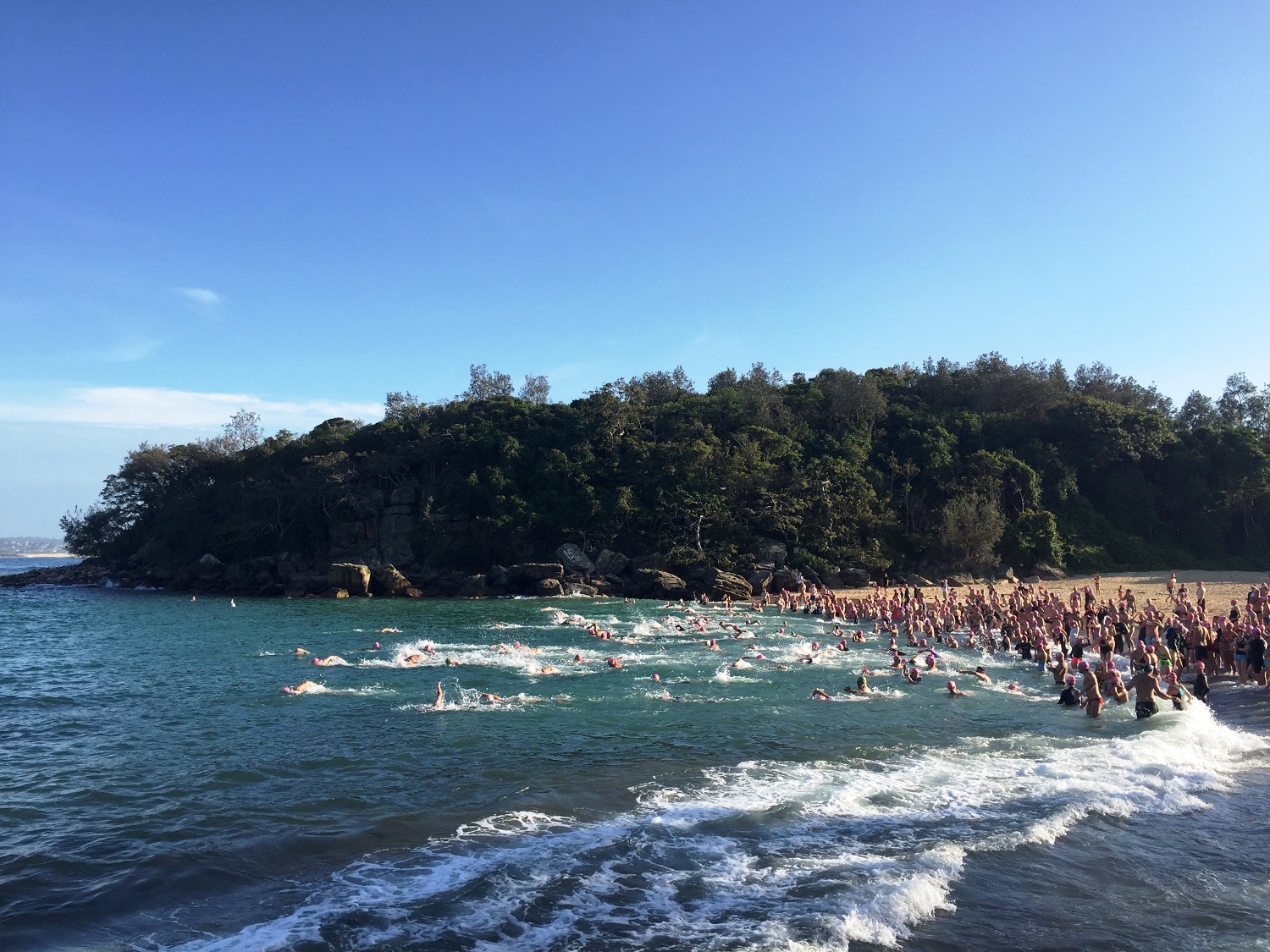
IMAGE: Wittylama, CC BY-SA 4.0, via Wikimedia Commons - https://commons.wikimedia.org/wiki/File:Bold_and_the_Beautiful_swim.jpg
Publicado
Como Citar / Vancouver
Edição
Seção
ARK
Licença
Copyright (c) 2026 K Overbury, BW Conroy, E Marks

Este trabalho está licenciado sob uma licença Creative Commons Attribution 4.0 International License.