
Rumo à Segurança Aquática Inteligente
Robô-boia, um Sistema de Detecção de Afogamento Baseado em Aprendizagem de Máquina e Veículo de Superfície Autônomo para Resgate
Downloads
Palavras-chave:
Detecção De Afogamento, Segurança Aquática, Aprendizado Profundo, Veículo De Superfície Não Tripulado (USV), Detecção De Objetos YOLO, Navegação Autônoma, Sistema De ResgateResumo
O afogamento continua sendo a terceira principal causa de mortes por lesões acidentais em todo o mundo, afetando desproporcionalmente países de baixa e média renda, onde a cobertura de salva-vidas é limitada ou inexistente. Para suprir essa lacuna crítica, apresentamos o Robobuoy, um sistema inteligente de resgate em tempo real que integra a detecção de objetos baseada em aprendizado profundo (deep learning) a um veículo de superfície não tripulado (USV) para intervenção autônoma. O sistema utiliza uma estação de monitoramento equipada com dois modelos especializados de detecção de objetos: o YOLO12m, para reconhecer pessoas em situação de afogamento, e o YOLOv5m, para rastrear o USV. Esses modelos foram selecionados pelo equilíbrio entre precisão, eficiência e compatibilidade com dispositivos de borda (edge devices) de recursos limitados. Um algoritmo de navegação geométrica calcula a direção do deslocamento a partir das detecções visuais e guia o USV até a vítima. Avaliações experimentais realizadas com um conjunto de dados combinado (de código aberto e personalizado) demonstraram um desempenho robusto: o YOLO12m alcançou um mAP@0,5 de 0,9284 na detecção de afogamentos, e o YOLOv5m obteve um mAP@0,5 de 0,9848 na detecção do USV. A validação do hardware em uma piscina controlada confirmou o sucesso na abordagem do alvo em todos os nove testes, com erro de posicionamento inferior a 1 metro e tempos de percurso variando entre 11 e 23 segundos. Ao combinar visão computacional de última geração e robótica autônoma de baixo custo, o Robobuoy oferece um protótipo acessível e de baixa latência para aprimorar a segurança aquática em ambientes sem supervisão, especialmente em regiões onde a vigilância convencional por salva-vidas é inviável.
Referências
(1) Stop Drowning Now. Facts & Stats About Drowning - Stop Drowning Now [Internet]. www.stopdrowningnow.org. 2018 [cited 14 April 2024]. Available from: https://www.stopdrowningnow.org/drowning-statistics/
(2) World Health Organization. Drowning [Internet]. Who.int. World Health Organization: WHO; 2024 Dec [cited 14 April 2024]. Available from: https://www.who.int/news-room/fact-sheets/detail/drowning
(3) Dworkin GM. 3-year-old Child Drowns in Guarded Pool in Front of Lifeguard in Elevated Stand [Internet]. Lifesaving Resources. 2016 Oct [cited 25 April 2024]. Available from: https://lifesaving.com/case-studies/3-year-old-child-drowns-in-guarded-pool-in-front-of-lifeguard-in-elevated-stand/
(4) Salman Jalalifar, Belford A, Erfani E, Amir Razmjou, Abbassi R, Masoud Mohseni-Dargah, et al. Enhancing Water Safety: Exploring Recent Technological Approaches for Drowning Detection. Sensors. 2024 Jan 5;24(2):331–1.
(5) Pratap K, Marjorie R. Anti Drowning System with Remote Alert Using Zigbee. Int. J. Pharm. Technol. 2016; 8, 20523–20527.
(6) Kulkarni A, Lakhani K, Lokhande S. A Sensor-Based Low-Cost Drowning Detection System for Human Life Safety. In: Proceedings of the 2016 5th International Conference on Reliability, Infocom Technologies and Optimization (Trends and Future Directions); 2016 Sep 7-9; Noida, India. India: ICRITO; 2016. p. 301–6.
(7) Liu T, He X, He L, Yuan F. A video drowning detection device based on underwater computer vision. IET Image Processing. 2023 Feb 23; 17, 1905–1918.
(8) Hayat MA, Yang G, Iqbal A. Mask R-CNN Based Real-Time Near-Drowning Person Detection System in Swimming Pools. In: Proceedings of the 2022 Mohammad Ali Jinnah University International Conference on Computing; 2022 Oct 27-28; Karachi, Pakistan. Karachi: MAJICC; 2022. p. 1–6.
(9) He Q, Zhang H, Mei Z, Xu X. High accuracy intelligent real-time framework for detecting infant drowning based on deep learning. Expert Systems with Applications. 2023 Oct 1;228:120204–4.
(10) Wang H, Zhang G, Cao H, Hu K, Wang Q, Deng Y, et al. Geometry‐Aware 3D Point Cloud Learning for Precise Cutting‐Point Detection in Unstructured Field Environments. Journal of Field Robotics. 2025 Apr 21;42(7):3063–76.
(11) Redmon J, Divvala S, Girshick R, Farhadi A. You Only Look Once: Unified, Real-Time Object Detection. In: Proceedings of the 2016 IEEE Conference on Computer Vision and Pattern Recognition; 2016 Jun 27-30; Las Vegas, USA. Las Vegas: CVPR; 2016. p. 779–788.
(12) He T, Ye X, Wang M.An Improved Swimming Pool Drowning Detection Method Based on YOLOv8. In: Proceedings of the 2023 IEEE 7th Information Technology and Mechatronics Engineering Conference; 2023 Sep 15-17; Chongqing, China. Chongqing: ITOEC; 2023. p. 835–9, Vol. 7.
(13) Rusakov KD, Gladkikh TY, Grafenkov AV, Mostakov NA, Goloburdin NV, Migachev AN. Drowning Detection Algorithm in Coastal Zones. In: Proceedings of the 2023 7th International Conference on Information, Control, and Communication Technologies; 2023 Oct 2-6; Astrakhan, Russia. Astrakhan: ICCT; 2023. p. 1-5.
(14) Tran NH, Pham QH, Lee JH, Choi HS. VIAM-USV2000: An Unmanned Surface Vessel with Novel Autonomous Capabilities in Confined Riverine Environments. Machines. 2021 July 15;9(7):133.
(15) Tran HD, Nguyen NT, Cao TNT, Gia LX, Ho K, Nguyen DD, et al. Unmanned Surface Vehicle for Automatic Water Quality Monitoring. Truong NV, Ha Q, editors. E3S Web of Conferences. 2024;496:03005.
(16) Yan X, Yang X, Feng B, Liu W, Ye H, Zhu Z, et al. A navigation accuracy compensation algorithm for low-cost unmanned surface vehicles based on models and event triggers. Control Engineering Practice. 2024 May;146:105896.
(17) Wang Y, Liu W, Liu J, Sun C. Cooperative USV-UAV marine search and rescue with visual navigation and reinforcement learning-based control. ISA Transactions. 2023 Jan; 137, 222–235.
(18) Hamid N, Dharmawan W, Nambo H. Dynamic Path Planning for Unmanned Surface Vehicles with a Modified Neuronal Genetic Algorithm. Appl. Syst. Innov. 2023; 6, 109.
(19) Sotelo-Torres F, Alvarez L, Roberts R. An Unmanned Surface Vehicle (USV): Development of an Autonomous Boat with a Sensor Integration System for Bathymetric Surveys. 2023 Apr 30 [cited 2026 Aug 5];23(9):4420–0. Available from: https://www.ncbi.nlm.nih.gov/pmc/articles/PMC10181514/
(20) Chen M, Zhang X, Xiong X, Zeng F, Zhuang W. Transformer: A Multifunctional Fast Unmanned Aerial Vehicles–Unmanned Surface Vehicles Coupling System. Machines. 2021 July 29;9(8):146.
(21) Pillai BM, Suthakorn J, Sivaraman D, Nakdhamabhorn S, Nillahoot N, Ongwattanakul S, et al. A heterogeneous robots collaboration for safety, security, and rescue robotics: e-ASIA joint research program for disaster risk and reduction management. Advanced Robotics. 2024 Feb;38(3):129–51.
(22) The R10 Robotics Competition 2024 – Robots for a Better World [Internet]. Ieeer10.org. 2024 [cited 14 December 2025]. Available from: https://robocomp.ieeer10.org/
(23) Lifeguarding Project. Yolov10 Dataset [Internet]. Roboflow. 2024 [cited 7 September 2025]. Available from: https://universe.roboflow.com/lifeguarding-project/lifeguarding-w-yolov10
(24) Swimming Pool Safety Management Object Detection Model by project-rrsvg. Swimming Pool Safety Management Dataset [Internet]. Roboflow. 2025 [cited 7 September 2025]. Available from: https://universe.roboflow.com/project-rrsvg/swimming-pool-safety-management
(25) Jocher G. ultralytics/yolov5 [Internet]. GitHub. 2020 Aug [cited 14 December 2025]. Available from: https://github.com/ultralytics/yolov5
(26) Ultralytics. YOLOv8 [Internet]. docs.ultralytics.com. 2023 Nov [cited 14 December 2025]. Available from: https://docs.ultralytics.com/models/yolov8/
(27) Wang CY, Yeh IH, Liao HYM. YOLOv9: Learning What You Want to Learn Using Programmable Gradient Information. arXiv (Cornell University). 2024 Feb 21; 2402.13616.
(28) Wang A, Chen H, Liu L, Chen K, Lin Z, Han J, et al. YOLOv10: Real-Time End-to-End Object Detection [Internet]. arXiv (Cornell University). 2024 May; 2405.14458.
(29) Ultralytics. YOLO11 [Internet]. Ultralytics.com. 2024 [cited 14 December 2025]. Available from: https://docs.ultralytics.com/models/yolo11/
(30) Ultralytics. YOLO12 [Internet]. Ultralytics.com. 2025 [cited 14 December 2025]. Available from: https://docs.ultralytics.com/models/yolo12/
(31) Liu W, Anguelov D, Erhan D, Szegedy C, Reed S, Fu CY, et al. SSD: Single Shot MultiBox Detector. In: Proceedings of the Computer Vision—ECCV; 2016 Oct 11-14; Amsterdam, The Netherlands. Switzerland: Springer; 2016. Vol. 9905.
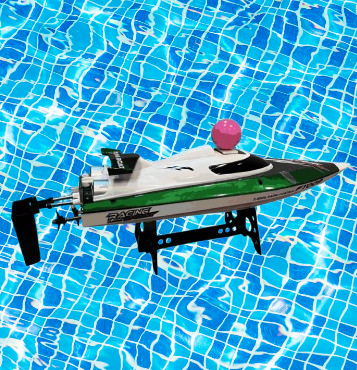
IMAGE: Photomontage for illustrative purposes only, featuring an image from the article and a background by lifeforstock https://www.magnific.com/author/lifeforstock
Artigo adaptado e traduzido para o português pelos editores de NADAR! SWIMMING MAGAZINE para republicação, conforme normas de submissão do periódico. Versão original em: https://www.mdpi.com/2571-5577/9/1/12 LICENÇA ORIGINAL E DA ADAPTAÇÃO: Attribution 4.0 International CC BY 4.0. https://creativecommons.org/licenses/by/4.0/
Publicado
Como Citar / Vancouver
Edição
Seção
ARK
Licença
Copyright (c) 2026 Krittakom Srijiranon, Nanmanat Varisthanist, Thanapat Tardtong, Chatchadaporn Pumthurean

Este trabalho está licenciado sob uma licença Creative Commons Attribution 4.0 International License.