Efeitos de diferentes modalidades pedagógicas de ensino de natação na capacidade de ajustamento emocional e na adaptabilidade social de adolescentes
Downloads
Palavras-chave:
Regulação Emocional, Modelo Pedagógico, Adaptabilidade Social, Ensino De Natação, AdolescentesResumo
Este estudo visa revelar a influência de diferentes modelos pedagógicos de ensino de natação na regulação emocional e na adaptabilidade social de adolescentes. O objetivo é esclarecer as diferenças na influência de variados métodos pedagógicos de ensino de natação sobre a capacidade de ajustamento emocional e a adaptabilidade social de adolescentes, bem como elucidar seu mecanismo e efeito de intervenção. Isso deve não apenas enriquecer os resultados da pesquisa interdisciplinar em psicologia do ensino de educação física e educação para a saúde mental de adolescentes, mas também fornecer uma base científica para a reforma do ensino de natação, otimizar o planejamento do método de ensino e tornar a natação uma ferramenta importante para promover o desenvolvimento coordenado do corpo e da mente dos adolescentes, o que possui importante valor teórico e relevância prática.
Referências
(1) Rizki DDG, Keliat BA. The relationship between emotional problems with self-identity in adolescents. Enferm Clín. 2021; 31:S161–4. doi: 10.1016/j.enfcli.2020.12.014
(2) Sezgin E, Bilge Y, Çelik B, Sevük EN. The mediating role of emotion lability and emotion regulation in the relationship between social-emotional adaptation with behavior regulation and social skills among preschool children. Yaşam Becerileri Psikoloji Dergisi. 2023; 7:161–83. doi: 10.31461/ybpd.1373592
(3) Yilmazer E. Emotional regulation in adolescence: a comprehensive review. Nişantaşi Üniversitesi Sosyal Bilimler Dergisi. 2024; 12:403–24. doi: 10.52122/nisantasisbd.1457804
(4) Li Y. Evaluation of the effect of mental health education on improving adolescents' social adaptability. New Dir Child Adolesc Dev. 2023; 2023:9374037. doi: 10.1155/2023/9374037
(5) Wu Z, Wang B, Xiang Z, Zou Z, Liu Z, Long Y, et al. Increasing trends in mental health problems among urban Chinese adolescents: results from repeated cross-sectional data in Changsha 2016–2020. Front Public Health. 2022; 10:829674. doi: 10.3389/fpubh.2022.829674
(6) Li J, Li J, Jia R, Wang Y, Qian S, Xu Y. Mental health problems and associated school interpersonal relationships among adolescents in China: a cross-sectional study. Child Adolesc Psychiatry Ment Health. 2020; 14:12. doi: 10.1186/s13034-020-00318-6
(7) Andermo S, Hallgren M, Nguyen TT, Jonsson S, Petersen S, Friberg M, et al. School-related physical activity interventions and mental health among children: a systematic review and meta-analysis. Sports Med Open. 2020; 6:25. doi: 10.1186/s40798-020-00254-x
(8) Villodres GC, Rodríguez-Mérida M, Muros JJ, Vizcaíno-Cuenca R. Effectiveness of physical education interventions on mental health in children and adolescents: a systematic review of wellbeing and distress across educational levels. Adolesc Res Rev. 2025; 1–29. doi: 10.1007/s40894-025-00276-0
(9) Huang S. Blue health among children, adolescents, and youth psychological well-being: a systematic review of swimming and aquatic therapy for mental health. Front Psychol. 2025; 16:1732568. doi: 10.3389/fpsyg.2025.1732568
(10) Sumartana IM, Setiaji Y. The physical and mental health benefits of swimming: enhancing fitness, relaxation, endurance, and overall well-being. J Interdiscip Multidiscip Stud (JIMS). 2025; 1: 88–100. Available online at: https://www.ewacmedical.com/wp-content/uploads/2025/04/Sumartana-2025-The-physical-and-mental-healthbenefits-of-swimming-Enhancing-fitness-relaxation-endurance-and-overall-well-being.pdf (Accessed May 15, 2026).
(11) González-Víllora S, Evangelio C, Sierra-Díaz J, Fernández-Río J. Hybridizing pedagogical models: a systematic review. Eur Phys Educ Rev. 2019; 25:1056–74. doi: 10.1177/1356336X18797363
(12) Zhang J, Geok Soh K, Bai X, Mohd Anuar MA, Xiao W. Optimizing learning outcomes in physical education: a comprehensive systematic review of hybrid pedagogical models integrated with the Sport Education Model. PLoS ONE. 2024; 19:e0311957. doi: 10.1371/journal.pone.0311957
(13) Rejman M, Kwaśna A, Chrobot M, Kjendlie PL, Stalmann RK. Perceived versus real swimming skills of adolescents under standard and challenging conditions: exploring water competencies as an approach to drowning prevention. Int J Environ Res Public Health. 2020; 17:3826. doi: 10.3390/ijerph17113826
(14) Orabi SM, Bayyat MM, Altaieb MHA, Jordan J. Life skills acquired through swimming context in relation to students' academic achievement. Dirasat. 2020; 47:580–6. Available online at: https://dsr.ju.edu.jo/djournals/index.php/Edu/article/view/1880 (Accessed May 15, 2026).
(15) Signorini G, Scurati R, Formenti D, Trecroci A, Merati G, Del Bianco R, et al. Multiteaching style and active reflection for swimming. Front Sports Act Living. 2025; 7:1679433. doi: 10.3389/fspor.2025.1679433
(16) Shen Y, Shao W. Influence of hybrid pedagogical models on learning outcomes in physical education: a systematic literature review. Int J Environ Res Public Health. 2022; 19:9673. doi: 10.3390/ijerph19159673
(17) Rocliffe P, O'Keeffe BT, Walsh L, Bannon A, Sherwin I, MacDonncha C, et al. The impact of typical school provision of physical education, physical activity and sports on adolescent mental health and wellbeing: a systematic literature review. Adolesc Res Rev. 2024; 9:339–64. doi: 10.1007/s40894-023-00220-0
(18) Weiss MR. Motor skill development and youth physical activity: a social psychological perspective. J Mot Learn Dev. 2020; 8:315–44. doi: 10.1123/jmld.2020-0009
(19) Jermann F, Linden MVD, D'Acremont M, Zermatten A. Cognitive emotion regulation questionnaire (CERQ). Eur J Psychol Assess. 2006; 22:126–31. doi: 10.1027/1015-5759.22.2.126
(20) Liu L, Guo C, Shi M, Wang J, Li Q, Miao H, et al. The development and application of social adaptability scale for children and adolescents. J Southwest Univ Nat Sci Ed. 2022; 44:2–12. Available online at: https://xbgjxt.swu.edu.cn/en/article/doi/10.13718/j.cnki.xdzk.2022.08.001?viewType=HTML (Accessed May 15, 2026).
(21) Johnston J, Harwood C, Minniti AM. Positive youth development in swimming: clarification and consensus of key psychosocial assets. J Appl Sport Psychol. 2013; 25:392–411. doi: 10.1080/10413200.2012.747571
(22) Alimuddin A, Nazri SBM, Liza L, Pebriyani D, Muchlis AP. Physical education and sport essential as transversality and body integration in the learning process: a systematic review. Retos. 2024; 58:20–7. doi: 10.47197/retos.v58.106061
(23) Klemmer B, Kinnafick FE, Spray C, Chater AM. The effectiveness of structured sport and exercise interventions in enhancing the mental health of adolescents with mild to moderate mental health problems: a systematic review. Int Rev Sport Exerc Psychol. 2025; 18:623–46. doi: 10.1080/1750984X.2023.2266823
(24) Nicolosi S, Ancona A. Effects of cooperative learning model on early adolescents' social and affective learning outcomes in physical education. Adv Phys Educ. 2020; 10:378. doi: 10.4236/ape.2020.104031
(25) MacEvilly D, Maguire K, Brosnan G, Gaffney L. Enhancing children's emotional regulation and social communication through group intervention–evidence of impact in an Irish outpatient Child and Adolescent Mental Health Service. Child Lang Teach Ther. 2024; 40:56–76. doi: 10.1177/02656590241228424
(26) Camacho-Morles J, Slemp GR, Oades LG, Morrish L, Scoular C. The role of achievement emotions in the collaborative problem-solving performance of adolescents. Learn Individ Differ. 2019; 70:169–81. doi: 10.1016/j.lindif.2019.02.005
(27) Li Z, Liu W, Li Q. How distributed leadership affects social and emotional competence in adolescents: the chain mediating role of student-centered instructional practices and teacher self-efficacy. Behav Sci. 2024; 14:133. doi: 10.3390/bs14020133
(28) Ma E, Lai T, Lee Y, Zhang Y, Fu S. How does emotion regulation affect adolescents' social adaptability? Building bridges for parent-child communication, empowered by AI education. Acta Psychol. 2025; 259:105444. doi: 10.1016/j.actpsy.2025.105444
(29) Nurhasanah E, Sudatha IGW, Santosa MH, Suartama IK. Group guidance strategies to social skills in adolescents: a literature review. J Eng Lang Educ. 2025; 10:799–812. Available online at: https://mail.jele.or.id/index.php/jele/article/view/985 (Accessed May 22, 2026).
(30) Bordo S, Costanzo G, Villani D. Enhancing psychological skills and well-being in sport through an app-based blended intervention: a randomized controlled pilot study. BMC Psychol. 2025; 13:537. doi: 10.1186/s40359-025-02824-8
Artigo adaptado e traduzido para o português pelos editores de NADAR! SWIMMING MAGAZINE para republicação, conforme normas de submissão do periódico. Versão original em: https://pmc.ncbi.nlm.nih.gov/articles/PMC13290840/ LICENÇA ORIGINAL E DA ADAPTAÇÃO: Attribution 4.0 International CC BY 4.0. https://creativecommons.org/licenses/by/4.0/.
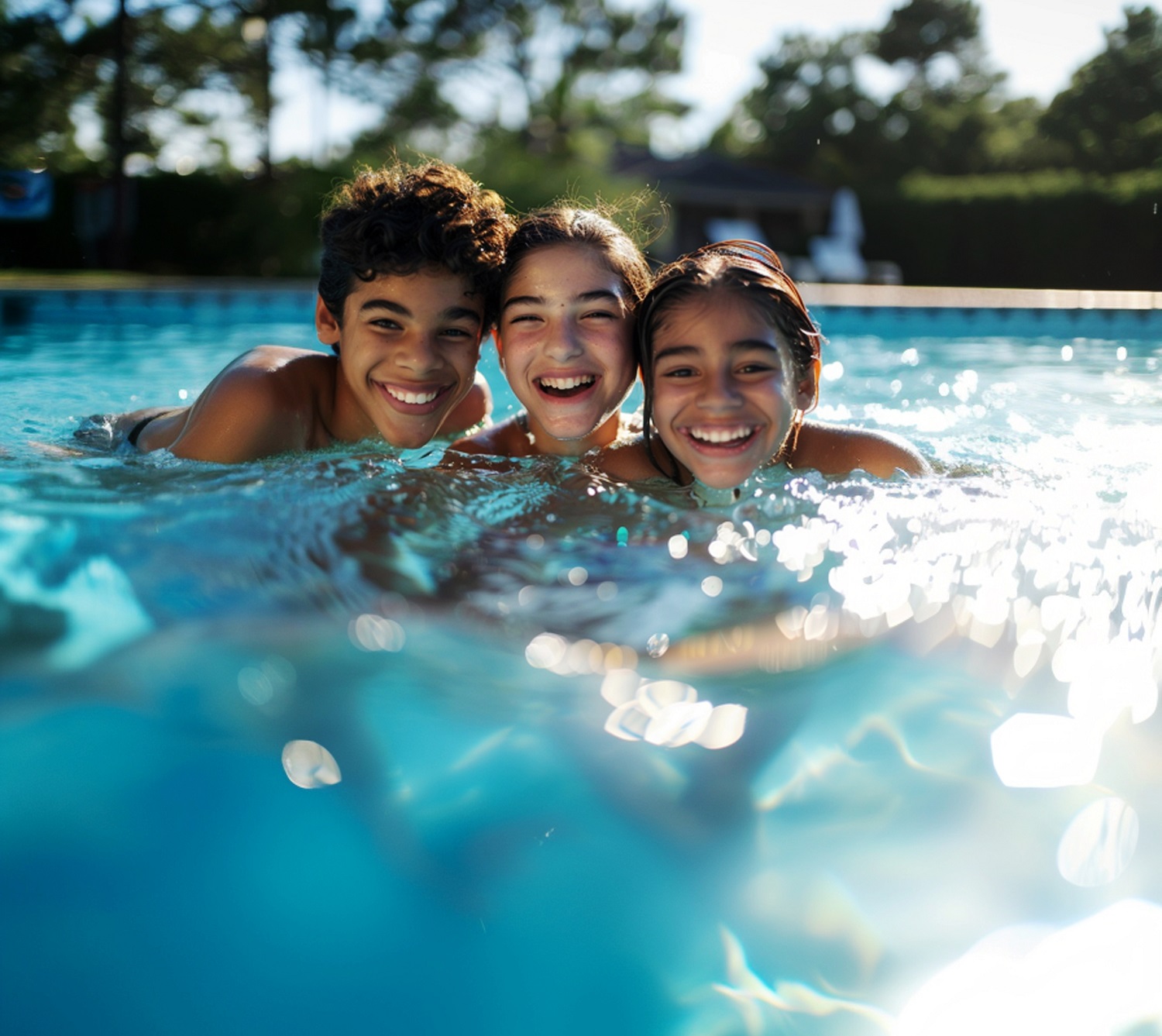
IMAGE: https://www.magnific.com/
Publicado
Como Citar / Vancouver
Edição
Seção
ARK
Licença
Copyright (c) 2026 Wanyun Feng

Este trabalho está licenciado sob uma licença Creative Commons Attribution 4.0 International License.